

If you work for yourself, the 1099 form independent contractor question usually hits in one of two moments. Either a client asks for a W-9 and you think, “Okay… cool?” Or it’s January and you’re refreshing your inbox like it owes you money, wondering if a missing form means missing income.
Here’s the clean truth. The 1099 form independent contractor reporting system is how businesses report certain payments made to nonemployees. It’s a paperwork trail. It’s not a personality test. And it’s absolutely something you can handle with confidence once you know what belongs where.
Simplicity Financial supports clients remotely across the U.S., including freelancers, consultants, creatives, tradespeople, and small business owners who want their tax season to feel like a plan instead of a scavenger hunt. If you want help organizing your 1099s and building a clean filing strategy, start here: book a consultation ✅
1099 Form Independent Contractor: Which 1099 Are People Usually Talking About?

When people say 1099 form independent contractor, they typically mean Form 1099-NEC (Nonemployee Compensation). The IRS explains how contractor payments are reported in its 1099-NEC overview and the related instructions. That’s the one most independent contractor payments flow through.
Using that framework, here’s which 1099 most contractors are actually talking about.
A quick way to remember it:
- If you’re paid as a contractor for services, the common form is 1099-NEC.
- If you’re an employee, you’re in W-2 land.
If you’re trying to make sense of a messy pile of forms, the simplest first move is organizing each payer’s 1099 and matching it to deposits in your records. That’s also why many contractors choose year-round organization support like outsourced bookkeeping services instead of trying to reconstruct a year from bank statements in April.
1099 Independent Contractor: When You Should Expect One
As a 1099 independent contractor, you generally receive a 1099-NEC from a client when your payments meet the IRS reporting rules. The IRS also has guidance for businesses on reporting payments to independent contractors and when a 1099-NEC is required.
Here’s the practical reality:
- If a client paid you for services in the course of their business, you may receive a 1099-NEC.
- If you worked for multiple clients, you may receive multiple forms.
- If you were paid through a third-party platform in certain cases, your forms may look different than you expect.
The key point for independent contractor taxes is this: you report your income even if a form is missing. The 1099 helps you reconcile. It doesn’t create the income.
If you want help matching the “paper forms” to the “real money,” this guide on how do I report a 1099’s on my tax return is a good companion read.
10-99 Independent Contractor: The Common Search That Signals Confusion
A lot of people type 10-99 independent contractor because it’s how the form name sounds out loud. If that’s you, you’re in the right place.
The form is “1099,” and the one most contractors mean is 1099-NEC. When you see “10-99,” treat it as a search typo, not a different form.
Independent Contractor 1099: What the Form Actually Shows

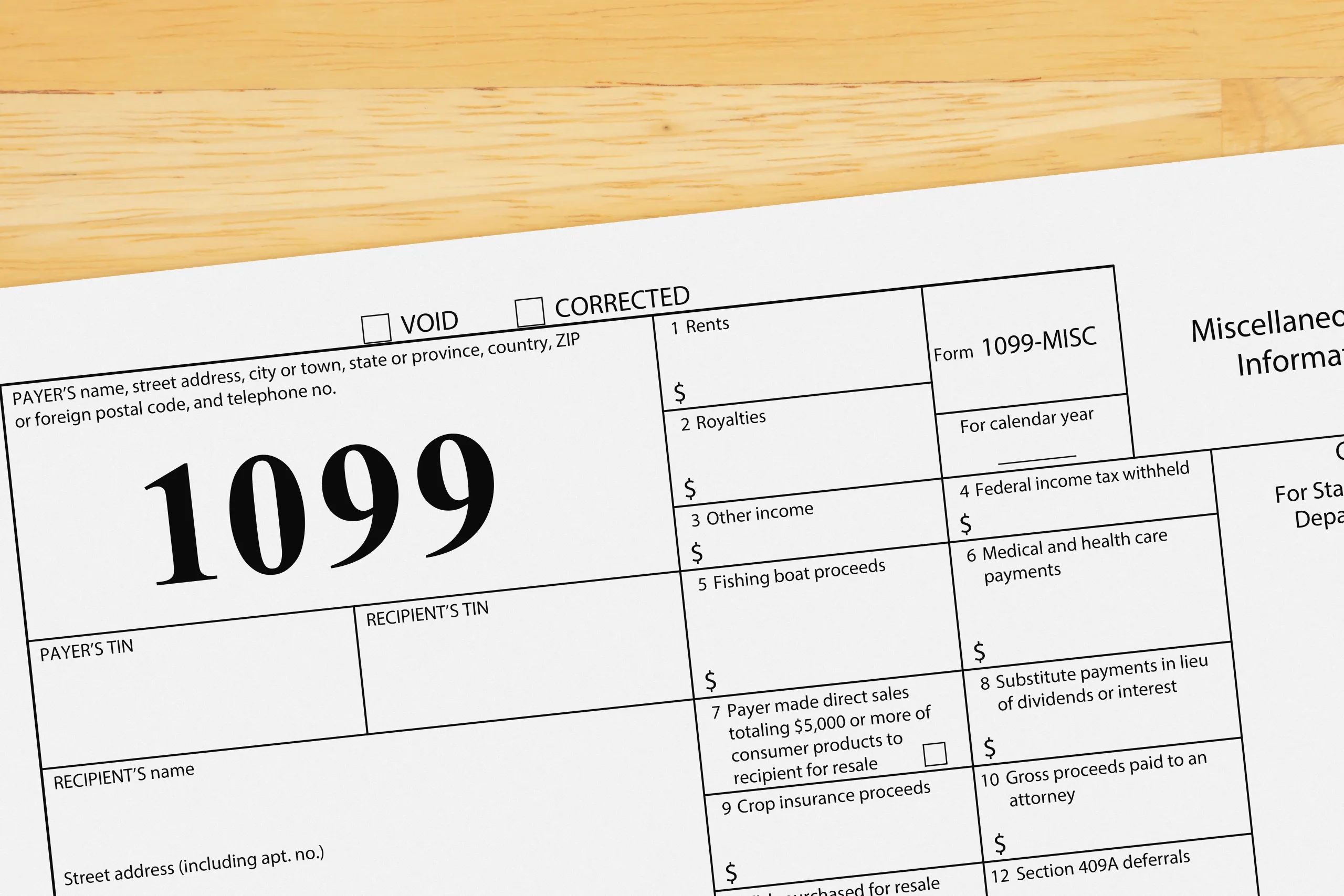
An independent contractor 1099 form typically shows:
- the payer’s information
- your taxpayer information
- the amount paid (often nonemployee compensation)
It does not show:
- your expenses
- your profit
- what you actually owe
That’s why independent contractor taxes can feel confusing the first year. The form is gross payments. Your tax return is the story of net income after legitimate business expenses.
If you want to build an organized system that makes this painless next year, bookmark the year-end tax planning checklist and treat it as a routine, not a once-a-year panic.
Independent Contractor Tax Form: What You’ll Actually File
A common question is “What’s the independent contractor tax form I file?” The 1099-NEC is what you receive. Your filing usually involves your personal tax return plus business schedules that report self-employment income and expenses.
The exact forms depend on your situation, but here’s the simplest framing:
- You report business income and expenses (often through Schedule C).
- You may calculate self-employment tax (often through Schedule SE).
- You may need estimated taxes throughout the year.
The IRS notes that self-employed individuals generally need to file an income tax return if net earnings from self-employment are $400 or more. That surprises people, because it’s based on net, not gross.
This is the moment many contractors decide they’d rather stop guessing. Tax preparation outsourcing can help when you want an experienced team to handle filing accurately, catch missed deductions, and keep your documentation consistent.
Independent Contractor Taxes: The Parts That Hit First-Time Filers
Independent contractor taxes often feel heavier than expected because there’s no employer withholding. Your client pays you. Then you’re responsible for setting aside money for taxes.
There are usually three big buckets people feel:
- income tax
- self-employment tax
- state taxes (depending on where you live and work)
A classic first-year scenario:
A contractor makes $25,000 from multiple clients, spends $4,000 on business expenses, and assumes taxes will be “like a normal job.” But because there was no withholding, the year-end bill feels bigger. It’s not necessarily higher in total than an employee’s combined burden. It’s just more visible because you’re responsible for paying it directly.
This is where a clean system changes everything. Keeping separate business categories, saving receipts, and tracking mileage makes it easier to estimate what you’ll owe before the deadline shows up.
Tax Form for Independent Contractor: When You Don’t Get a 1099
Here’s the part that saves people from unnecessary stress: a tax form for independent contractor income is not always provided by every payer, and you may still have income that doesn’t generate a 1099.
Examples:
- A client paid under a threshold and didn’t issue a form.
- A client made a mistake and never sent it.
- You received payments from overseas clients with different reporting.
- You were paid via a platform that issues different reporting.
Your job is to report your income accurately. The 1099 is a matching tool. If you’re missing a form, you can still reconcile income using deposits, invoices, and payment platform reports.
How to File Taxes as an Independent Contractor Without Losing a Weekend
If you’ve searched how to file taxes as an independent contractor, what you really want is a process you can repeat every year without reinventing it.
Here’s a structured approach that works:
Step 1: Create a “1099 and Income” Folder
Save every 1099-NEC the day it arrives. Also save payment summaries from any platforms.
Step 2: Reconcile 1099 Totals to Your Real Deposits
A mismatch doesn’t automatically mean “someone is wrong,” but it does mean “check it.”
Step 3: Separate Business Expenses Into Simple Categories
Think: software, supplies, travel, subcontractors, home office (if applicable), and professional fees.
Step 4: Confirm Your Filing Strategy
Some contractors want to keep it simple. Others want proactive planning that prevents surprises.
If you want a better system for tracking money movement, this guide on payment methods for small businesses helps contractors choose tools that keep income and expenses easier to categorize.
Step 5: Decide Whether You’re DIY Filing or Getting Help
If your income is steady, your expenses are clear, and you’ve got good records, DIY might work. If you have multiple 1099s, mixed income types, a new business, or you just want it done correctly without stress, support usually pays for itself in time saved and mistakes avoided.
If you want a sense of what professional help typically costs, this breakdown of the average cost of tax preparation by CPA gives you a realistic way to compare options.
1099 Form Independent Contractor: What If You’re the One Issuing It?
Some independent contractors also hire subcontractors. If you pay other contractors, you may need to issue 1099-NEC forms yourself. That’s when the contractor becomes the payer.
A simple rule to remember: if you’re paying contractors for services in the course of your business, the IRS may require reporting depending on payment type and threshold. The IRS provides guidance and instructions for these filings, which is why it’s worth building the habit of collecting proper taxpayer information up front.
This is where proactive systems matter. When you have a plan for collecting info, paying vendors, and documenting work, tax season becomes a routine. When you don’t, it becomes a detective novel with missing pages.
1099 Form Independent Contractor: Next Steps With Simplicity Financial
A 1099 form independent contractor situation is easiest when your income is organized, your expenses are categorized, and your filing strategy is planned before January. If you’re dealing with multiple 1099s, missing forms, or a first-year contractor filing, Simplicity Financial can help you build a clean system and file accurately, entirely remotely.
To get started, book a consultation here: contact Simplicity Financial ✅
For more practical tax guidance, browse the blog.
Frequently Asked Questions About 1099 Form Independent Contractor
1099 Independent Contractor: Do I Still Report Income If I Don’t Receive a Form?
Yes. A 1099 independent contractor form helps reconcile payments, but you generally still report income even if a payer doesn’t issue a form. Use invoices, deposits, and payment summaries to confirm totals.
Independent Contractor Tax Form: Is the 1099-NEC the Form I File?
The 1099-NEC is typically what you receive. Your independent contractor tax form filing usually includes reporting income and expenses on your tax return, plus related schedules depending on your situation.
Independent Contractor Taxes: Why Do They Feel Higher Than a W-2 Job?
Independent contractor taxes often feel higher because there’s no paycheck withholding. You’re responsible for setting aside and paying taxes directly, which makes the totals more visible.
How to File Taxes as an Independent Contractor If I Have Multiple 1099s
If you’re learning how to file taxes as an independent contractor, start by reconciling each form to deposits, then categorize expenses. If the volume is high or the records are messy, professional help can save time and prevent errors.
10-99 Independent Contractor: Is That a Different Form?
No. 10-99 independent contractor is usually a typo or shorthand people use when they mean 1099. The contractor form most people mean is typically 1099-NEC.
Where Can I Get Help With My Independent Contractor 1099 Filing?
If you want remote support, Simplicity Financial can help clients across the U.S. organize 1099 income, document expenses, and file with confidence.
Disclaimer
This article is for general informational purposes only and does not constitute tax, legal, or accounting advice. Readers should consult a qualified accountant or tax professional for guidance tailored to their situation, or verify details with official IRS instructions and publications before making decisions.