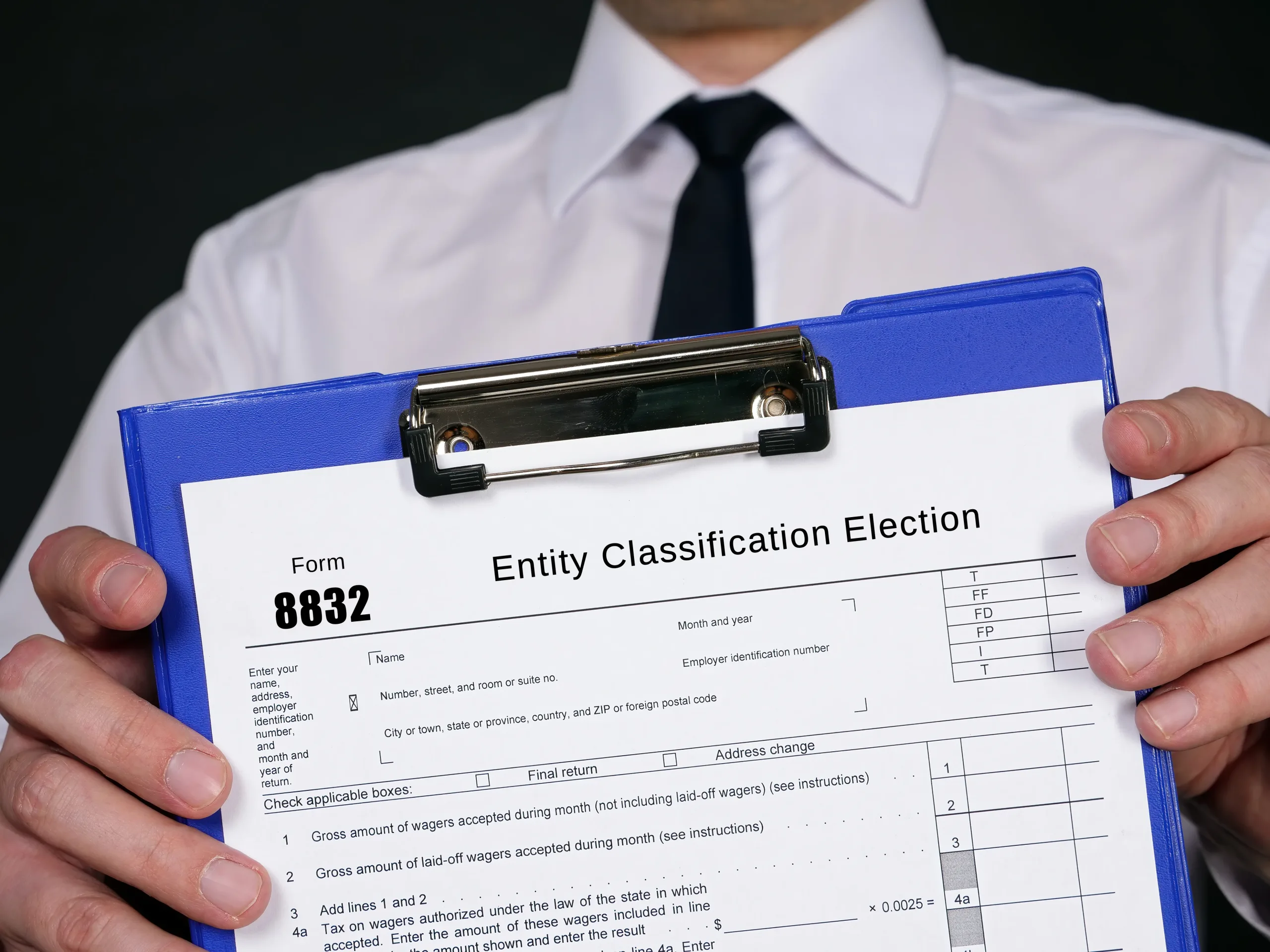
Form 8832 is the “pick your tax classification” form. It matters most for LLC owners who want something other than the default IRS treatment. It can also matter for multi owner entities that want to switch how they’re treated for federal tax purposes.
If you want a CPA to confirm whether filing Form 8832 is actually worth it for your specific numbers, start with Simplicity Financial and send your situation through the contact page. One short message with your entity type, income range, and payroll plan is usually enough to get a clear direction.
Here’s the official IRS framing in one line: the IRS says “An eligible entity uses Form 8832 to elect how it will be classified for federal tax purposes.” Use that as the anchor for everything below, because it explains what this form does and what it does not do. First-time reference source: IRS guidance on Form 8832.
What Is Form 8832 and Why People File It
What is Form 8832 in practical terms? It’s a classification election. It tells the IRS how to treat an eligible entity for federal tax purposes, like treating the entity as a corporation or partnership instead of the default.
This is why Form 8832 is often discussed in the same breath as LLC tax strategy. Many LLCs never file it. They stay with the default and file accordingly.
But when a business owner wants a different outcome, Form 8832 can be the lever.
Common reasons a tax form 8832 comes up:
- A single member LLC wants to be treated as a corporation for federal tax purposes
- A multi member LLC wants a change in classification for future years
- A business is restructuring ownership and wants the tax treatment to match the new plan
- A founder wants the entity classification to align with investor expectations or a future sale
If you’re still sorting out the legal language around LLCs, this internal explainer helps clarify the difference between the legal structure and the tax treatment: is an LLC incorporated or unincorporated.
Form 8832 LLC Basics: Default vs Elected Tax Treatment

Form 8832 LLC questions usually start with a misunderstanding: many people assume the LLC “is” taxed one specific way. In reality, the LLC is a legal structure. The tax classification can be default or elected.
A simple way to keep it straight:
- The LLC is created under state law
- The IRS then applies a default federal classification
- Form 8832 can change that classification if the entity is eligible
That’s why two businesses can both be “LLCs” and still file very differently for federal taxes.
If you’re in the earlier “should I even set this up as an LLC or something else?” stage, this internal page is a better first stop before you worry about elections: should I incorporate myself.
What You Are Actually Electing With the 8832 Form
The 8832 form is not a “lower my taxes” button. It’s a classification election. The tax impact comes from what that classification changes about filing, deductions, payroll planning, and how income flows to owners.
In plain CPA terms, the election can affect:
- which return the entity files
- whether income is reported on a business return, an owner return, or both
- how owner compensation is typically handled
- how clean your books need to be to support the filing method
This is why entity elections should be paired with a bookkeeping plan, not treated as a paperwork-only task. If your current books are messy, it becomes harder to support the choice you’re making. Many owners clean this up first with outsourced bookkeeping services, then make the election once the financials tell a clear story.
Form 8832 Instructions: The Filing Timeline People Miss

Form 8832 instructions matter because timing errors create the most avoidable pain.
The IRS guidance for LLC classification explains a key rule about effective dates: generally, an election specifying an LLC’s classification cannot take effect more than 75 days before the date the election is filed, and cannot take effect later than 12 months after the date the election is filed.
That one rule is why many “we meant to file it last year” situations turn into cleanup work.
If you’re aiming for a specific effective date, don’t wait until the last minute. File with intent, not panic.
A CPA Quick Check: When Form 8832 Is Worth Considering
Before the paperwork, a CPA usually asks a few grounding questions. Not because the form is complicated, but because the consequences can be.
1. What Is the Business Actually Trying to Achieve?
Lower overall tax is sometimes a goal. So is cleaner reporting. So is preparing for a future sale.
2. Who Owns the Entity and How Will Profits Be Distributed?
Single owner and multi owner entities can have very different planning constraints.
3. Will There Be Payroll?
Payroll changes the planning conversation. It also changes compliance needs.
4. Can the Business Support Better Books?
If the books can’t support the election, the election becomes a liability instead of a strategy.
When the decision touches cash flow, payroll, and long-term planning, many owners benefit from a higher-level modelling conversation before filing anything. That’s exactly where fractional CFO services can help. It’s less about theory and more about “what happens to your take-home, your cash flow, and your compliance load.”
Step by Step: How a CPA Approaches Form 8832 Instructions
This is not legal advice. It’s the “how to think about it” workflow that helps people avoid the common missteps.
1. Confirm the Entity Is Eligible
Form 8832 applies to eligible entities. Not every entity can use it in the same way.
2. Identify Current Classification and Desired Classification
This sounds obvious, but it’s the field where people accidentally elect something they didn’t intend.
3. Choose the Effective Date Carefully
This is where the 75-day and 12-month window matters most.
4. Align the Books With the Election
If your filing changes, your bookkeeping needs to match. Otherwise, you will spend the year untangling transactions to match the return.
5. File and Retain Proof
Keep a complete copy. Keep proof of mailing or filing. Keep it with your permanent entity records.
If you want the filing handled cleanly and documented properly, many business owners use tax preparation outsourcing so deadlines, attachments, and follow-through don’t fall on the “I’ll do it later” pile.
Can You Claim Head Of Household Based On Form 8832?
This keyword comes up because people see “election” and assume it applies to personal filing status.
Can you claim head of household based on form 8832? No. Form 8832 is about how a business entity is classified for federal tax purposes. Head of Household is an individual filing status. They are separate concepts. One does not create the other.
If someone is asking this, it usually signals a deeper issue: the business owner is mixing personal household tax strategy with entity structure decisions. A CPA will typically separate those conversations and solve them in order.
Common Mistakes With Tax Form 8832
Here are the errors that cause the most avoidable hassle.
1. Filing It Without a Plan
A classification election should match a business plan. Otherwise, you can end up with more compliance burden and no upside.
2. Choosing an Effective Date That Doesn’t Match Reality
If your effective date doesn’t match how you operated and how you reported, you create inconsistency.
3. Assuming “LLC” Automatically Means “S Corporation”
An LLC can be taxed in different ways, but the election path depends on what you’re trying to accomplish and which elections apply.
4. Ignoring the Bookkeeping Impact
Entity elections raise the standard for clean books. The IRS does not care that you “meant well.” It cares that the return ties out.
Form 8832: The Practical Takeaway

Form 8832 can be a smart move when it’s used intentionally. It can also be a pointless complication when it’s filed because someone on social media said it was “the best.”
If you’re considering Form 8832, the best next step is not guessing. It’s getting a short CPA review that ties the election to your real numbers and your real plan.
If you want that review, use the contact page and include three details: your entity type, how many owners you have, and whether you plan to run payroll.
For the firm listing and remote support details, here’s the practice location profile: Simplicity Financial remote CPA services.
Frequently Asked Questions About Form 8832
What Is Form 8832 Used For?
What is Form 8832? It’s the IRS entity classification election form. It lets an eligible entity choose how it will be classified for federal tax purposes.
What Is the 8832 Form for an LLC?
Form 8832 LLC use is most common when an LLC wants to change from the default IRS tax classification to a different classification that better matches its business plan.
Where Can Form 8832 Instructions Be Verified?
Form 8832 instructions can be verified directly through the IRS guidance page for the form, including the purpose and classification options.
Can You Claim Head Of Household Based On Form 8832?
Can you claim head of household based on form 8832? No. Head of Household is an individual filing status. Form 8832 is an entity classification election for business taxation.
When Should a Business Owner Think About Tax Form 8832?
Tax form 8832 is usually worth reviewing when an LLC owner wants a non-default tax treatment, is planning for payroll, is restructuring ownership, or wants the tax treatment to match long-term goals.
Disclaimer
This article is for general informational purposes only and does not constitute tax, legal, or financial advice. Tax outcomes depend on individual facts and circumstances, and tax rules may change. For advice tailored to your situation, consult a qualified CPA or tax professional and refer to official IRS guidance.