

Form 3115 is the IRS form used to request a change in your accounting method. It applies to a wide range of taxpayers, from solo landlords catching up on missed depreciation, to businesses switching from cash to accrual accounting, to real estate investors using cost segregation to accelerate deductions. By the end of this guide, you will understand the automatic vs. non-automatic distinction, how the Section 481(a) adjustment works, and what it takes to file correctly.
Form 3115 filings involve procedural precision that creates real consequences when something is missed. If you would like a CPA to evaluate your situation and manage the process, Simplicity Financial’s tax preparation services are available entirely online, serving individuals, businesses, and real estate investors across California and nationwide.
What is Form 3115?
Form 3115, officially titled the “Application for Change in Accounting Method,” is the IRS form taxpayers use to request a change in how they recognize income, record expenses, or treat specific items like depreciation. It is the official mechanism for making an accounting method change in a way the IRS formally approves and acknowledges.
One distinction worth understanding upfront: a change in accounting method is different from correcting a math error or updating an estimate. Correcting an error means fixing a mistake in how a rule was applied. Changing an estimate, like adjusting the useful life of equipment, is handled separately. A true change in accounting method refers to switching from one permissible treatment to another, such as moving from cash basis to accrual basis accounting or adopting a different depreciation schedule. For background on how tax accounting differs from financial accounting, see our overview of audit vs. tax accounting.
The form has two main procedural tracks. The first is the automatic change procedure, where the IRS pre-approves certain common changes and the taxpayer files without needing prior permission. The second is the non-automatic procedure, which requires advance IRS consent before the change takes effect. IRS Revenue Procedure 2015-13 is the foundational authority governing both tracks.
Who Needs to File Form 3115?
A wide range of taxpayers may need to file Form 3115 when changing a method of accounting. Individuals, partnerships, S corporations, C corporations, trusts, and nonprofit organizations can all encounter situations that require this form. It is not just a large-corporation issue.
The most common situations that trigger a filing include:
- Switching from cash basis to accrual basis accounting, or the reverse
- Correcting missed or incorrectly claimed depreciation on real property or equipment
- Adopting or changing a cost capitalization method under the tangible property regulations
- Changing an inventory valuation method
- Making elections under the Tax Cuts and Jobs Act available to smaller taxpayers
Not every accounting decision requires this form. A new taxpayer making a first-year election on their original return generally does not need to file it. Businesses choosing a method for the first time are making an initial election, not a change. The form applies when you are moving from one established method to a different one.
Automatic vs. Non-Automatic Changes: What is the Difference?

The single most important question before filing Form 3115 is whether your requested change is automatic or non-automatic. The answer determines your entire filing process.
Under Rev. Proc. 2015-13, there are two consent procedures. Understanding both prevents costly procedural mistakes.
Automatic changes: what the IRS pre-approves
Automatic changes are accounting method changes the IRS has already decided to allow without requiring prior approval. A taxpayer simply files with their tax return and the change is effective for that year. No waiting, no advance application, and no user fee.
The list of automatic changes is published and updated regularly. Rev. Proc. 2023-24 is the current reference document for designated automatic changes. Common examples include:
- Depreciation corrections for property previously misclassified or omitted
- Small taxpayer safe harbor elections under the tangible property regulations
- Changes in income recognition timing for certain long-term contracts
- Changes in the inventory valuation method for qualifying small businesses
- Adopting a permitted overall method of accounting for a new trade or business within an existing return
- Changes related to the uniform capitalization rules for eligible taxpayers
One important caution: the list is updated annually. A change that was automatic last year may have moved categories. Always check the current Rev. Proc. before assuming your situation qualifies.
Non-automatic changes: when you need advance IRS consent
Non-automatic changes require IRS approval before making the accounting method change. The taxpayer files during the tax year the change is intended to take effect, along with a user fee that varies based on the type of change and size of entity.
Non-automatic changes typically include situations not listed in the current automatic change Rev. Proc., changes requested by taxpayers currently under IRS examination, certain industry-specific changes involving unique facts and circumstances, and changes where the IRS wants to evaluate the taxpayer’s specific situation before granting consent.
The advance consent timeline matters. Because the IRS must review and respond before the change takes effect, filing early in the tax year is essential. A CPA can help determine which track applies and ensure the filing is timed correctly.
How to Use Form 3115 for Missed Depreciation
One of the most common and practical uses of Form 3115 is recovering missed depreciation deductions from prior years. This comes up frequently for rental property owners, real estate investors, and business owners who did not claim the correct depreciation, or any depreciation at all, in prior tax years.
Amended returns are an option within the standard three-year window, though that process carries its own costs and limitations. See our overview of amended tax returns for what that process typically involves. Form 3115 offers a different path through what is called a Section 481(a) adjustment. This adjustment allows a taxpayer to calculate the total cumulative difference between what was claimed under the old method and what would have been claimed under the correct method. That full catch-up amount is then recognized in the current tax year, on the original return, without amending prior years.
A simple example: a taxpayer owned a rental property for three years and missed $10,000 in depreciation they were entitled to claim. Instead of filing three amended returns, they file Form 3115 with their current year return and claim the full $10,000 Section 481(a) adjustment as a deduction this year.
When the Section 481(a) adjustment increases income, the IRS allows the taxpayer to spread that amount over four years. When the adjustment reduces income, such as catching up on missed depreciation, the full deduction is taken in the year of change.
The biggest practical advantage of Form 3115 in this context is that it eliminates the statute of limitations barrier. Instead of being limited by the three-year amendment window, a taxpayer can recover years of missed depreciation in a single filing.
Cost segregation studies are a frequent driver of these filings in real estate. When a cost segregation analysis reclassifies a property’s components into shorter depreciation lives, Form 3115 is often filed to claim accelerated depreciation going forward and catch up on prior years at the same time.
How to File Form 3115: A Step-by-Step Breakdown
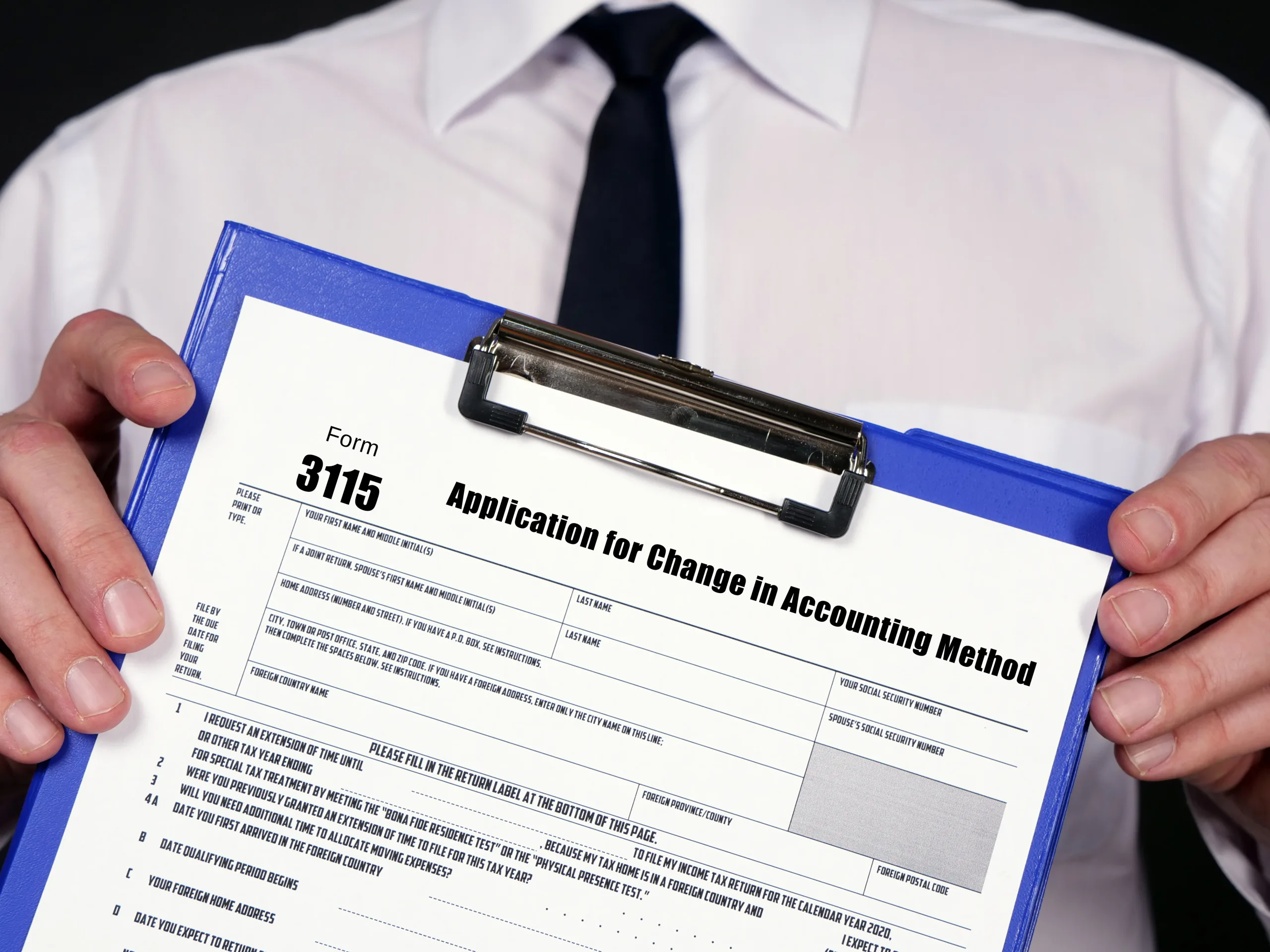
Filing Form 3115 follows a clear process when you know what to expect.
1. Determine if the change is automatic or non-automatic
Reference the current Rev. Proc. 2023-24 to confirm whether your change is on the automatic list. If it is not listed, treat it as non-automatic and plan for advance consent.
2. Gather your information
You will need your tax identification number, a clear description of your current accounting method, a description of the proposed method, and the legal authority supporting the change.
3. Complete the four parts of Form 3115
Part I covers general information about the taxpayer and the change. Part II applies to automatic changes. Part III covers non-automatic changes. Part IV is for computing the Section 481(a) adjustment.
4. File in the right place at the right time
For automatic changes, attach Form 3115 to your timely filed original tax return for the year of change. You must also send a duplicate copy to the IRS National Office in Ogden, Utah. Both filings are required.
5. Pay the applicable user fee for non-automatic changes
File during the tax year the change is to take effect, along with the applicable user fee. For automatic changes, no fee applies.
The deadline for automatic changes is the original due date of the return, including extensions. A common misconception is that this form can be filed with an amended return. The IRS generally does not accept this. It must go with the original return for the year of change.
Required Supporting Documents for Form 3115
Incomplete filings are a frequent cause of rejection. Standard attachments include:
- A written description of the accounting method change being requested
- The legal authority supporting the change, such as the specific Revenue Procedure or Code section
- A detailed computation of the Section 481(a) adjustment showing the difference between the old and new methods
- Any consent agreements required for non-automatic changes
- Relevant financial schedules or depreciation workpapers that support the adjustment amount
A CPA can help ensure your filing is complete and that every required attachment is in order before submission. See how Simplicity Financial’s accounting services support this kind of work year-round.
What Happens if You Do Not File Form 3115?
Failing to file when a change in accounting method is required creates real problems. The IRS does not look favorably on undisclosed method changes, and the consequences can be significant.
If a taxpayer changes their accounting practices without filing, the IRS has the authority to require them to change back. In that case, the entire Section 481(a) adjustment may be required to be recognized in a single year, with no spreading option. The IRS can impose the full positive Section 481(a) adjustment all at once when the change is discovered during an audit rather than voluntarily disclosed.
Missed depreciation that is not addressed through this process can also be permanently lost once the three-year amendment window closes. Without the form, there is no mechanism to recover those deductions. A landlord who has used the wrong depreciation method for four years and does not file Form 3115 loses those missed deductions entirely, and any IRS review of the discrepancy would result in a forced correction on the IRS’s terms rather than the taxpayer’s.
For non-automatic changes specifically, making the change without advance IRS consent is not permitted at all. The taxpayer would be considered noncompliant. If you are working through other IRS forms this season, our breakdown of Form 3922 may be a useful companion resource.
Getting ahead of this with professional support is almost always simpler and less costly than addressing it after an IRS review.
Common Mistakes to Avoid When Filing Form 3115

1. Assuming a change is automatic without checking the current list
The automatic change list is updated annually. A change that appeared in last year’s Rev. Proc. may have been moved, revised, or removed. Always verify against the current document before proceeding.
2. Forgetting the duplicate copy to the IRS National Office in Ogden
For automatic changes, taxpayers must file a copy with the original return and send a duplicate to the Ogden office. Missing this second filing can invalidate the entire submission.
3. Miscalculating the Section 481(a) adjustment
This requires knowing what was claimed, what should have been claimed, and which years are included. Errors in this calculation affect both the tax benefit and the IRS’s ability to verify the filing.
4. Filing with an amended return instead of the original
The IRS generally does not accept Form 3115 attached to an amended return. It must accompany the original return for the year of change.
5. Filing while under examination without understanding the restrictions
Certain changes in method of accounting are prohibited or restricted during an open audit. Filing in this window without knowing the rules can trigger additional scrutiny or result in a denial.
6. Confusing a method change with an error correction or estimate change
These are three distinct situations with different procedures. Misclassifying one as the other leads to the wrong form, the wrong process, and potential IRS pushback.
7. Using an outdated version of the form
The IRS revises its forms periodically. Submitting a prior-year version is a documented source of rejections. Because the IRS updates the automatic change list annually, version control is an ongoing responsibility.
Form 3115 is a Tool That Works in Your Favor When Filed Correctly
Form 3115 is a powerful and legitimate tool for correcting accounting methods, recovering missed deductions, and keeping your tax reporting aligned with IRS requirements. The automatic vs. non-automatic distinction shapes everything about how and when you file, and the Section 481(a) adjustment is what makes it possible to recover years of missed deductions in a single return.
Getting the procedural details right from the start is what separates a clean filing from one that triggers delays or IRS scrutiny. Simplicity Financial handles Form 3115 filings regularly, across a wide range of client situations, working entirely online with businesses and individuals across California and nationwide. If you have missed deductions or need to change your accounting method, book a free consultation and we will evaluate your options and manage the process from start to finish.
Disclaimer: This article is for general informational purposes only and should not be taken as tax, accounting, legal, or financial advice. Rules can change, and the right approach depends on your specific situation. For guidance related to your personal, business, nonprofit, or ministry finances, speak with a qualified CPA or tax professional.