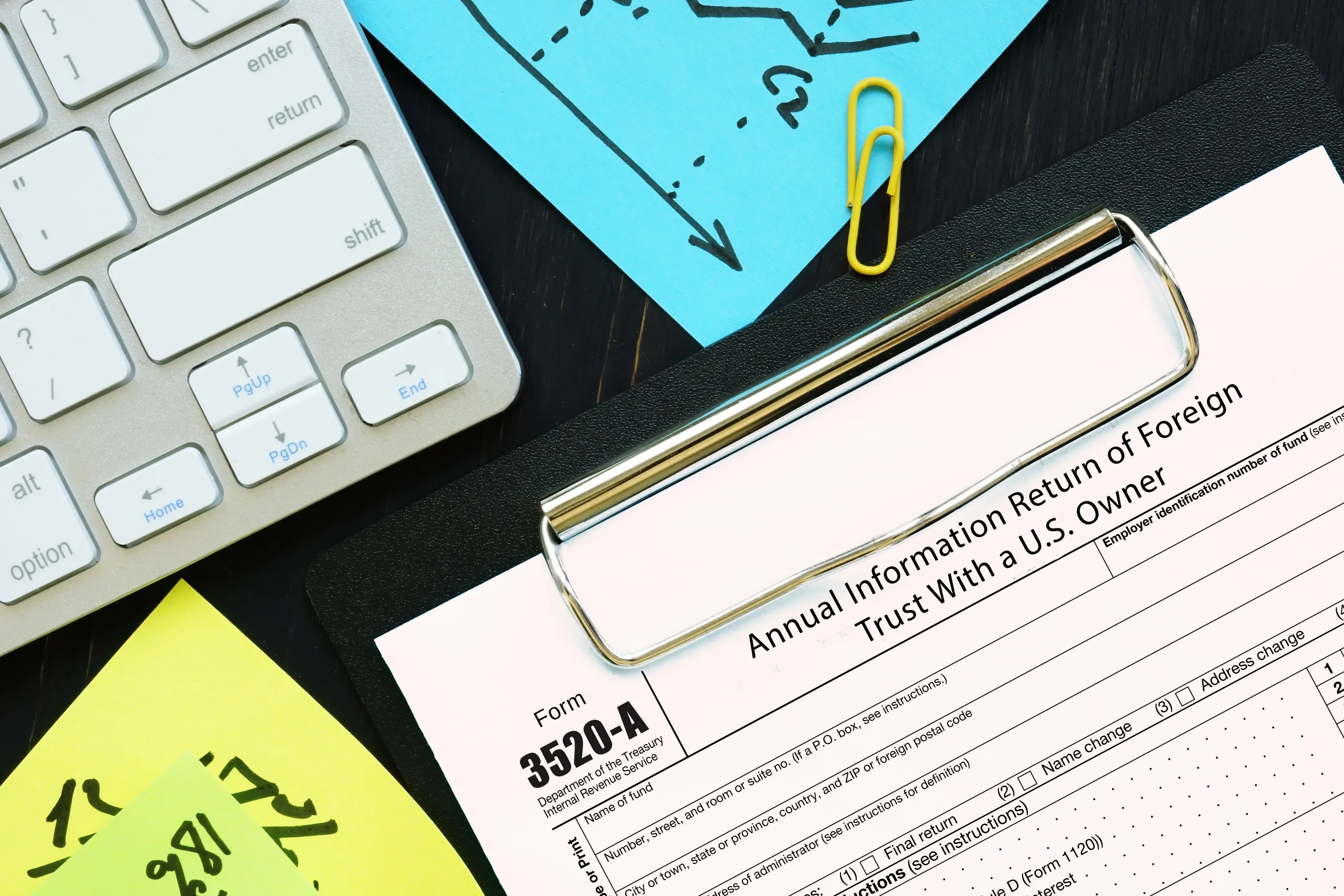
A foreign trust can sit quietly in the background for years. Then tax season arrives, and a U.S. owner suddenly needs form 3520-a. The stress is rarely the paperwork itself. It’s the timing, the required statements, and the fear of penalties if something is missed.
The IRS describes this as an annual information return for a foreign trust with at least one U.S. owner. It’s used to report information about the trust, U.S. beneficiaries, and U.S. persons treated as owners.
For Americans who want this handled remotely, Simplicity Financial supports clients across the U.S. with a structured process that prioritizes clarity and documentation. Start with a quick intake here: book a remote consult 😊
The Quick Checklist for a Clean Foreign Trust Filing
- Confirm the trust’s tax year-end.
- Confirm whether the trustee is filing on time.
- Confirm whether an extension is needed and filed correctly.
- Gather the required owner and beneficiary statements.
- Keep a clear folder of support documents and a one-page timeline.
If you’re also dealing with the U.S. person reporting side, the companion guide on Form 3520 helps clarify what belongs where.
What Is Form 3520-A and Who Files It

If you’re asking what is form 3520-a, the simplest answer is: it’s the foreign trust’s annual information return when there is a U.S. owner.
You may see it typed as Form 3520A in checklists. In most contexts, that’s shorthand for the same topic.
Who Is Responsible
- The foreign trust generally files the return and provides required statements to U.S. owners and beneficiaries.
- If the trust doesn’t file, the U.S. owner may need to file a substitute package to stay compliant.
This “who files what” step is where most form 3520-a instructions should start.
Form 3520-A Deadlines That Catch People Off Guard
The deadline is not automatically “April.” It’s based on the trust’s tax year.
Baseline Due Date
The return is due by the 15th day of the 3rd month after the end of the foreign trust’s tax year.
- Calendar-year trust: typically mid-March
- Fiscal-year trust: the due date shifts with the trust year-end
If the Trust Does Not File
If the trustee fails to file, the U.S. owner may need to attach a substitute package to Form 3520 by Form 3520’s due date, depending on the facts.
Form 3520-A Instructions for Extensions

A personal income tax extension does not automatically extend this trust return. If more time is needed, an extension request is generally filed by the due date and tied to the trust’s EIN.
Here’s a clean way to follow form 3520-a instructions for extensions:
- Confirm the trust year-end and calculate the due date.
- Confirm the trust EIN.
- File the extension request before the due date.
- Save proof of filing with the trust records.
Penalties: The Mistakes That Usually Trigger Them
Penalties are why this filing deserves a no-guessing approach. The most common penalty triggers are workflow problems, not “math errors.”
Top Penalty Triggers
- Filing late
- Missing required statements
- Submitting incomplete or inconsistent information
- Assuming the trust filed when it did not
If penalty anxiety is turning into audit fear, this guide on audit vs tax accounting helps separate normal compliance work from what an audit actually is.
Build the Filing Packet Before You Fill Anything Out

A reliable packet makes the process smoother. It also helps reduce rework if the trustee, beneficiary, and tax preparer are all coordinating.
Document Checklist
- Trust identifying details (name, country, tax year, EIN if applicable)
- Trustee contact information
- U.S. owner information and ownership basis
- Trust income summary for the year
- Trust distribution summary for the year
- Required statements for owners and beneficiaries (as applicable)
- Supporting records that match the summaries
- A one-page timeline of major trust-year events
One-Page Timeline Template
- Trust year start and end dates
- Contributions (date, amount, source)
- Distributions (date, amount, recipient)
- Ownership or trustee changes
- Notes on missing documents and follow-up items
If you want a plain-English way to interpret how forms and statements fit together, how to read tax returns is a helpful reference.
For clients managing many accounts and documents, outsourced bookkeeping services can keep records consistent year-round.
Common Mistakes That Create Rework
- Using the wrong trust year-end
- Waiting to ask the trustee for statements
- Treating required statements as optional
- Confusing Form 3520 responsibilities with the trust’s annual return
- Filing without a timeline that explains contributions and distributions
If you want an end-to-end workflow, tax preparation outsourcing can support a structured process for reporting-heavy returns.
When This Filing Connects to Bigger Planning
Some households only need compliance support. Others need planning across entities, reporting, and cash flow, especially when trust activity intersects with business decisions.
If that sounds familiar, fractional CFO services can add structure so compliance fits into a broader plan instead of interrupting it.
You can also browse related guidance in the Simplicity Financial blog.
Check Your Form 3520-A Plan With Simplicity Financial
Form 3520-a gets easier when the filing responsibility is confirmed early, deadlines are mapped, and the packet is built before anyone starts typing numbers.
For Americans who want remote support, start here: get help with foreign trust reporting 😊
Frequently Asked Questions About Form 3520-A
What Is Form 3520-A
What is form 3520-a? It’s the foreign trust’s annual information return when there is at least one U.S. owner.
Form 3520-A Instructions: When Is It Due
The return is due by the 15th day of the 3rd month after the end of the foreign trust’s tax year.
Form 3520 a Instructions: Does a Personal Extension Cover It
Form 3520 a instructions treat this as separate from a personal extension. The extension request is tied to the trust and its EIN.
If the Trust Doesn’t File, What Should the U.S. Owner Do
If the trust doesn’t file, the U.S. owner may need to submit a substitute package with Form 3520 by Form 3520’s due date, depending on the facts.
Form 3520 a vs Form 3520-A: Are People Talking About Different Forms
Form 3520 a is commonly used as shorthand for this annual trust return. The important distinction is between Form 3520 (U.S. person reporting) and the trust’s annual filing.
Where Can Americans Get Remote Help
For support, Simplicity Financial can help clients across the U.S. remotely.
Disclaimer
This article is for general informational purposes only and does not constitute tax, legal, or accounting advice. Readers should consult a qualified accountant or tax professional for guidance tailored to their situation, or check with local tax authorities for the most accurate and up-to-date information